A full inbox at 10 p.m. can look like dedication from the outside. Inside, it may feel like dread, numbness, irritability, or the sense that there is no part of the day that truly belongs to you. Workplace burnout is not a personal failure or proof that you are not resilient enough. It is a meaningful signal that the demands you are carrying may have exceeded the support, rest, control, or safety available to you.
For many people, work is tied to much more than a paycheck. It can be connected to health insurance, housing, family responsibilities, identity, immigration concerns, caregiving, or the pressure to be seen as dependable. That makes it hard to simply “set boundaries” when the consequences of saying no feel real. A compassionate response to burnout makes room for those realities.
What workplace burnout can look like
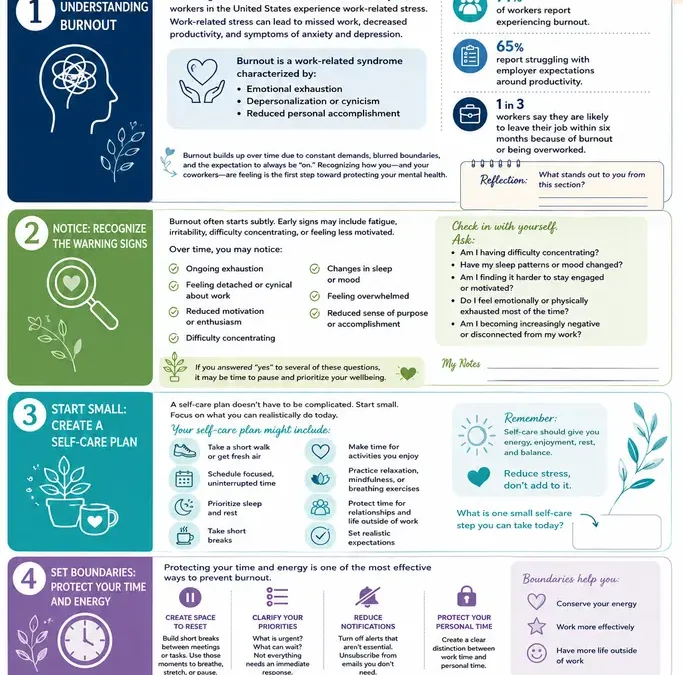
Burnout often develops gradually. You may first notice that you are more tired than usual or less patient with coworkers. Over time, the strain can affect your body, relationships, confidence, and ability to enjoy things that once helped you feel grounded.
Common signs include:
- Feeling emotionally exhausted before, during, or after work
- Dreading tasks you once handled with confidence
- Becoming detached, cynical, numb, or unusually irritable
- Having trouble concentrating, remembering details, or making decisions
- Experiencing changes in sleep, appetite, headaches, stomach discomfort, or muscle tension
- Pulling away from loved ones because you have little energy left to give
Not everyone experiences burnout in the same way. Some people become visibly overwhelmed or tearful. Others keep meeting expectations while feeling disconnected from themselves. High-functioning burnout can be especially difficult to recognize because productivity may continue for a while, even as your wellbeing declines.
Burnout can overlap with anxiety, depression, trauma responses, grief, chronic stress, and physical health concerns. A licensed mental health professional can help you sort through what you are experiencing without rushing to label it.
Why workplace burnout is more than an individual problem
Self-care can be helpful, but it cannot solve an unsafe workload, discrimination, unpredictable scheduling, inadequate staffing, harassment, low pay, or a workplace culture that treats rest as a weakness. When organizations expect people to do the work of several employees, answer messages around the clock, or absorb constant conflict without support, burnout is a predictable outcome.
People from marginalized communities may also carry additional stress at work. Being the only person of your identity on a team, managing bias, code-switching, facing accessibility barriers, or feeling pressure to represent an entire community can create a level of emotional labor that is often unseen. These experiences deserve to be named with care, not minimized.
At the same time, burnout can be shaped by what is happening outside of work. Parenting, caring for an aging family member, financial strain, chronic illness, trauma history, and limited transportation or childcare can leave little room for recovery. The goal is not to blame yourself for having limits. The goal is to understand the full picture and identify support that fits your actual life.
Small steps that can create breathing room
When you are burned out, major changes may feel impossible. Start with actions that reduce strain or increase support, even slightly. One small adjustment will not fix a harmful workplace, but it can help you reconnect with your needs and make decisions from a steadier place.
Notice your early warning signs
Try checking in at the end of the workday with a few simple questions: What drained me most today? When did I feel tense in my body? What helped, even briefly? A note on your phone or a few sentences in a journal can reveal patterns. Perhaps meetings without breaks leave you depleted, or perhaps you feel most anxious when messages arrive after hours.
Naming the pattern can make the next step clearer. You may need a protected lunch break, fewer back-to-back appointments, clearer priorities, or a conversation about workload. If you are not in a position to request changes safely, identifying the pattern still matters. It can help you protect your energy where you can and plan for longer-term options.
Make boundaries specific and realistic
A boundary does not have to be a dramatic declaration. It may be as practical as turning off work notifications at a set time, using an out-of-office message during approved leave, declining one nonessential task, or asking your supervisor which deadline should take priority.
The right boundary depends on your role and level of job security. If direct limits could put you at risk, consider quieter forms of protection: taking your full break when possible, saving documentation of workload concerns, using available employee resources, or talking with a trusted person before making a larger change. Safety and stability matter.
Build recovery into ordinary moments
Recovery is not always a weekend away or a complete break from responsibility. It can be a few minutes of quiet in the car before going inside, a short walk, a meal eaten without multitasking, stretching between calls, or texting someone who helps you feel less alone. These moments do not erase systemic stress, but they can interrupt the feeling that your body must stay on alert all the time.
Try to choose restoration over pressure. If exercise feels supportive, it may help. If another demand on your schedule feels exhausting, rest may be the more caring choice. There is no single correct way to recover.
Let someone know what is happening
Burnout often grows in isolation. Sharing honestly with a trusted friend, partner, coworker, faith leader, or therapist can reduce shame and create room for practical support. You do not have to explain everything perfectly. You might simply say, “Work is affecting me more than I expected, and I could use someone to listen.”
If your workplace has a supportive manager or human resources process, you may choose to discuss adjustments, leave options, or workload concerns. Consider what information feels safe to share and what outcome you are asking for. You are allowed to prepare notes before the conversation or bring a support person when appropriate.
When therapy can help with workplace burnout
Therapy offers a private, nonjudgmental space to talk about the impact of work without having to perform competence or gratitude. It can help you identify what is within your control, process anger or grief, practice communication skills, and explore the beliefs that keep you pushing past your limits.
For some people, cognitive behavioral therapy, or CBT, can help identify thought patterns such as “If I rest, I am letting everyone down” and replace them with more balanced, realistic perspectives. Dialectical behavior therapy, or DBT, can support emotion regulation, distress tolerance, and interpersonal effectiveness when work feels intense or conflict-filled. When burnout is connected to past trauma or current experiences that leave you feeling unsafe, trauma-informed care and approaches such as EMDR may also be part of a healing plan.
Therapy is not about convincing you to tolerate an unhealthy situation. It can help you make decisions with greater clarity, whether that means seeking accommodations, changing roles, taking leave, rebuilding routines, or preparing for a job search. It can also help you tend to the parts of your life that burnout has crowded out: relationships, creativity, sleep, pleasure, and a sense of self beyond work.
At The CENTER for Wellbeing, counseling is offered with attention to each person’s circumstances, cultural background, and access needs. Individual therapy, groups, and telehealth can make support more reachable for people balancing demanding schedules, transportation barriers, or financial concerns.
A gentle question to carry forward
If you have been telling yourself to push through, pause and ask: What would change if I treated my exhaustion as information instead of a flaw? You deserve support that honors both your responsibilities and your humanity. Taking your wellbeing seriously is not stepping away from your life. It is one way of returning to it.
 Spanish
 English (United States)