
A search for play therapy Grand Rapids often starts after a parent, caregiver, or young person notices that something feels different. A child may be more withdrawn, quick to anger, fearful at bedtime, or struggling at school. A teen may say very little about what is wrong while carrying a great deal underneath. These reactions are not signs that someone has failed. They can be signals that a young person needs a safe, supportive way to make sense of difficult feelings and experiences.
Play therapy creates room for that work without expecting children to explain everything perfectly. Through play, creative expression, stories, movement, and age-appropriate conversation, a trained therapist can help a young person communicate what may feel too confusing, painful, or overwhelming to put into words.
What play therapy is and why it works
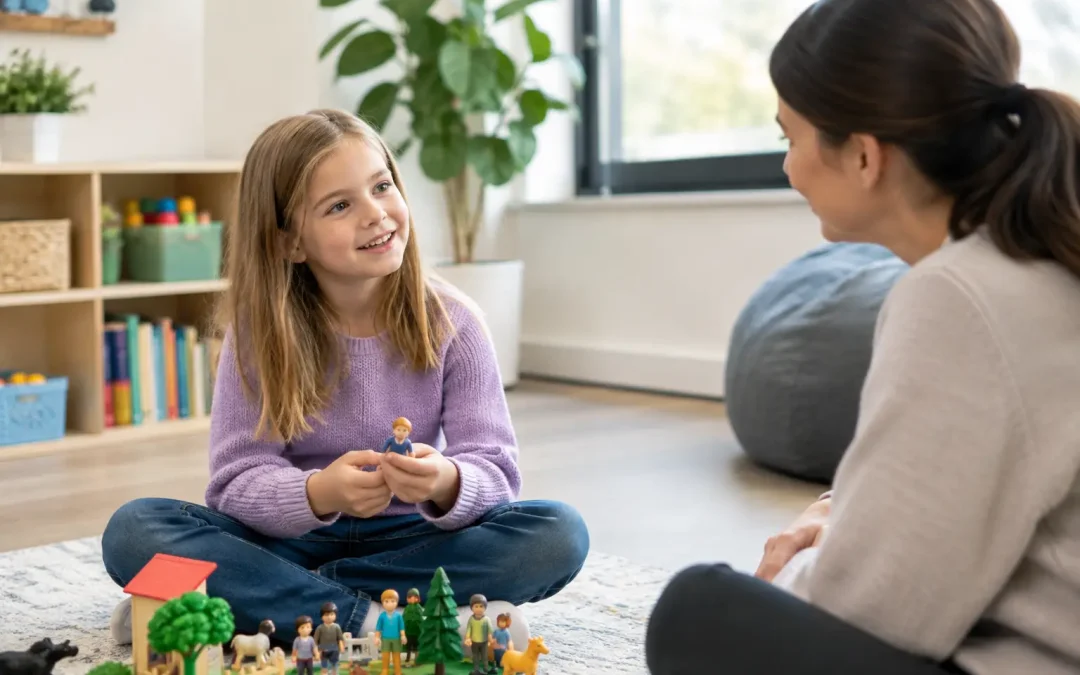
Play is one of the ways children naturally learn, practice relationships, solve problems, and express emotion. In therapy, play is used with care and clinical purpose. A therapist may invite a child to use art materials, games, figures, imaginative stories, or sensory activities. The activity itself is not the treatment. The healing comes from the therapeutic relationship, thoughtful observation, and opportunities to safely express and work through experiences.
For example, a child who has lived through a frightening event may repeat parts of that experience in play. Rather than rushing them to stop or demanding a detailed explanation, the therapist helps create safety, names feelings at a pace the child can tolerate, and supports new ways of coping. A child who feels powerless may use play to practice choice, boundaries, confidence, and problem-solving.
The approach can be especially helpful when stress shows up through behavior rather than words. Big feelings are often communicated through tears, irritability, avoidance, perfectionism, conflict, stomachaches, or changes in sleep. Therapy does not treat those responses as “bad behavior.” It asks what the behavior may be trying to communicate and helps the child build skills for what comes next.
Who may benefit from play therapy in Grand Rapids?
Play therapy can support children and younger adolescents facing many kinds of emotional distress. It may be considered when someone is dealing with anxiety, grief, family changes, bullying, school stress, relationship difficulties, identity-related concerns, or the effects of trauma. It can also help when a young person has trouble regulating emotions, feels isolated, or has experienced a major transition such as a move, separation, loss, or change in caregiving.
There is no single profile of a young person who needs support. Some are openly distressed. Others are high-achieving, helpful, and quiet, yet feel overwhelmed in private. Young people from marginalized communities may also carry stress connected to racism, discrimination, financial hardship, immigration experiences, gender identity, sexuality, disability, or feeling misunderstood in spaces that should feel safe. Culturally responsive care matters because healing is not separate from a person’s family, community, identity, and lived experience.
Play therapy is not only for young children. With adolescents, therapy may include creative activities, games, art, storytelling, and structured skill-building alongside more direct conversation. The right approach depends on developmental age, interests, comfort level, and goals. A teenager should never be made to feel that an expressive activity is childish or forced. The work should feel respectful, collaborative, and relevant to their life.
What a first appointment can feel like
Beginning therapy can bring relief and uncertainty at the same time. Caregivers may wonder whether they will be blamed, whether their child will talk, or how much they will be told about the sessions. Young people may worry that therapy means something is wrong with them. A compassionate provider makes space for these concerns from the start.
Early sessions generally focus on getting to know the child or teen, understanding what has been happening, and identifying strengths as well as challenges. The therapist may ask caregivers about development, school, routines, family relationships, health history, significant events, and what they hope will change. They will also explain privacy and its limits in clear language.
Confidentiality helps young people speak honestly, but it does not mean caregivers are shut out. The exact level of caregiver involvement depends on the client’s age, clinical needs, and family circumstances. A therapist may share themes, progress, and practical ways to support coping at home while protecting the young person’s private space. Safety concerns, including risk of harm, are handled differently and require appropriate action.
For many children, trust is built gradually. A first session may look like getting familiar with the room, choosing an activity, or having a short conversation. Progress is rarely a straight line. Feeling safer can sometimes bring difficult emotions closer to the surface before coping improves. That is one reason a steady, nonjudgmental therapeutic relationship is so valuable.
Play therapy and trauma-informed care
Trauma-informed play therapy recognizes that emotional and physical safety come first. It does not push a child to relive painful experiences before they have enough support and coping tools. Instead, therapy helps them regain a sense of choice, predictability, connection, and control.
A trauma-informed therapist pays attention to how stress may affect the nervous system. A young person who seems defiant may actually be in a threat response. Someone who goes quiet or appears disconnected may be overwhelmed rather than uninterested. Seeing these reactions with curiosity instead of shame can change how adults respond at home, in school, and in treatment.
Depending on the young person’s needs, therapy may incorporate evidence-based approaches such as cognitive behavioral therapy, dialectical behavior therapy skills, or trauma-focused methods. Expressive and play-based work can complement these approaches by making coping skills easier to understand and practice. Breathing exercises, grounding, emotional identification, communication, and boundary-setting can become more approachable when they are learned through an activity rather than presented as a lecture.
How caregivers can support the process
Caregivers do not need to become therapists at home. Their most helpful role is often to offer steadiness: listening without immediately correcting, making room for feelings, and noticing small shifts in what helps their child feel safe.
It can help to keep routines as predictable as possible, especially around sleep, meals, school, and transitions. Giving a child limited choices can restore a sense of control, such as choosing between two snacks or deciding whether to talk during a walk or while drawing. After therapy, a simple question like, “Would you like company, quiet, or a snack?” may be more supportive than asking for every detail.
Caregivers also deserve support. Parenting or caring for a distressed young person can be exhausting, particularly when a family is navigating work demands, financial stress, health concerns, or their own history of trauma. Family sessions, parent consultation, individual counseling, and community support can help adults feel less alone and more equipped to respond with care.
Finding the right fit for play therapy Grand Rapids families need
The relationship with the therapist matters as much as the type of activity used in session. Look for a licensed clinician who can explain their training, experience, and approach in plain language. It is reasonable to ask how they involve caregivers, how they support trauma recovery, whether they have experience with concerns similar to your family’s, and how they provide culturally responsive care.
Practical access matters, too. The best therapeutic fit may not be sustainable if transportation, scheduling, insurance, or cost makes regular care impossible. Families in the Grand Rapids area may benefit from asking about Medicaid, BCBS, BCN, sliding-scale or low-cost options, telehealth when appropriate, and appointment times that work around school and employment. For younger children, in-person care is often most useful because play materials and connection are central to the work. For teens, telehealth can sometimes be a helpful option when privacy and engagement can be supported at home.
At The CENTER for Wellbeing, care is grounded in the belief that people deserve respect, practical support, and space to heal without judgment. Finding help is not about labeling a child or proving that a family is in crisis. It is about making room for feelings, strengthening coping skills, and helping a young person experience themselves as understood.
A child or teen does not need to have the right words before asking for support. Sometimes a safer relationship, a box of art supplies, a carefully chosen game, and a clinician who is willing to listen can become the beginning of a different path forward.
 English (United States)
 Spanish